The Last Adam and the Royal King: How the Genealogies Reveal Jesus
Blog post description. This article explores how the genealogies of Matthew and Luke, along with key Old Testament prophecies and types, reveal Jesus as the Seed of the woman, the Last Adam, and the rightful King on David’s throne.
12/27/20255 min read
Living in a Time of Full Revelation
We are living in a special time in God’s plan. We have the whole Bible, both the Old and New Testaments, and can see the full picture in Jesus Christ. In the first century, Jews had only the Old Testament, with its prophecies scattered throughout. Some were easy to understand, while others were hidden in symbols and stories.
In Genesis 3:15, God promised that the “seed of the woman” would crush the serpent’s head, a prophecy ultimately fulfilled in Christ (cf. Galatians 4:4; Romans 16:20). Micah 5:2 foretold that the Messiah would be born in Bethlehem, “whose goings forth are from of old, from everlasting,” pointing to One who is more than merely human (see Micah 5:2; Matthew 2:1–6; John 1:1–2).
Messianic Prophecy and Foreshadowing
The Old Testament not only predicts Christ with words, but also points to Him through events. For example, in Numbers 21:8–9, God told Moses to lift a bronze serpent on a pole so that anyone who looked at it would live. Jesus later said this event was a sign of how He would be lifted up on the cross to save us (John 3:14–15).
Jonah’s three days and nights inside the big fish is another example. Jesus clearly connects Jonah’s story to His own burial and resurrection in Matthew 12:40. This shows that even Old Testament stories were getting people ready for Him (see Jonah 1–2; Matthew 12:40). The Old Testament believers had the puzzle pieces, but the New Testament lays them out and shows how they all fit together in Christ.
Royal and Human Lines: Matthew and Luke
Matthew begins his Gospel with a family tree tracing Jesus’ legal and royal lineage through Joseph. This highlights Jesus’ Jewish roots, tracing from Abraham to David and then to Joseph (Matthew 1:1–17). But there is an important question in this list: Matthew 1:11 mentions Jeconiah (also called Coniah), a king who was cursed in Jeremiah 22:24–30: “none of his offspring will prosper, none will sit on the throne of David or rule anymore in Judah.”
Does this curse mean Jesus cannot be king from David’s line? No. Joseph is Jesus’ legal father, not His biological father. Because of adoption, Jesus has the full legal right to David’s throne but does not carry Jeconiah’s curse. This shows how God keeps His promises. Luke, on the other hand, traces Jesus’ family through Mary, tracing it back to David’s son Nathan and avoiding Jeconiah (Luke 3:23–31). Luke even traces the line back to “Adam, the son of God” (Luke 3:38), showing that Jesus is truly part of the human family.
Two Adams and One Lord
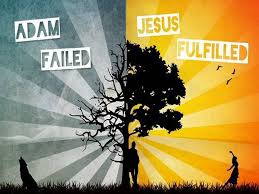
Luke’s genealogy shows that everyone descends from Adam, the first head of the human race (Luke 3:38). When Adam sinned, all people were affected. That’s why Paul says, “Sin entered the world through one man, and death through sin” (Romans 5:12). Adam is called the son of God because God made him from dust (Genesis 2:7), and Eve is the “mother of all living” (Genesis 3:20). But both of them became sinners by disobeying God.
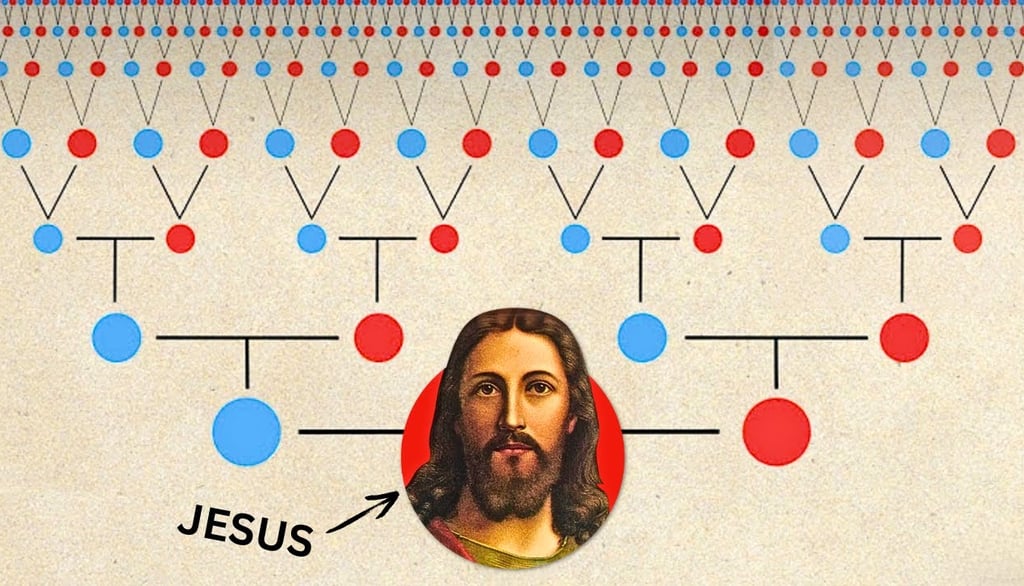
The sin nature is passed down through Adam, not through Eve. This is why Genesis 3:15 talks about the “seed of the woman,” not the seed of man. In Luke 1:35, the angel tells Mary that the Holy Spirit will come to her, and the child will be called the Son of God. Eve is also a Child of God; all beings created by God directly are children of God. The nation of Israel is, nationally, the son of God; all angels are the sons of God; Adam was the Son of God; Saved Christians are the Children of God; and, since Eve was created by God, she is also a child of God. She is also called the mother of all living (Gen. 3:20).
It is important to note that Eve did not inherit a sin nature; she acquired it when she chose to sin. Because the sin nature is transmitted federally, not biologically or genetically, Eve is not in the line of federal transmission. This is why the Messiah had to be born of a Virgin. The Seed of the Woman does not inherit the federally transmitted sin nature. Because Jesus was born of a virgin, He is fully human but does not have Adam’s sin nature; this explains Christ’s unique personhood. Because of this, Jesus is the sinless Son of God and the “Last Adam” of Romans 5:18–19 and 1 Corinthians 15:45. Where Adam brought condemnation, Christ brings justification. Now everyone is under either Adam, who brought death, or Christ, who gives life.
The Eternal Word Who Became Flesh
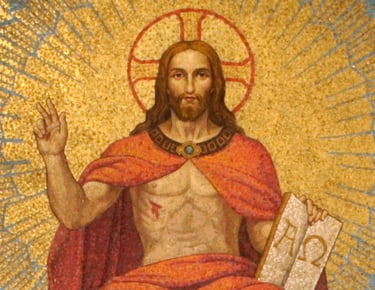
Jesus’ story does not start with Abraham, David, or even Adam. Micah 5:2 says a ruler will come from Bethlehem, whose origins are “from of old, from everlasting,” showing that He existed before time began. John writes, “In the beginning was the Word, and the Word was with God, and the Word was God… and the Word became flesh and dwelt among us” (John 1:1–2, 14).
The promised Seed of the woman is the Lord Himself, who entered our broken world as the perfect Last Adam. He lived a sinless life, died for those who did wrong, and took on sins He never committed so we could have new life. To everyone who receives Him and believes in His name, He gives the right to become children of God (John 1:12). If your life feels like scattered puzzle pieces, Christ is the “box top” that shows the whole picture: the true King from David’s line, the sinless Son of God, the eternal Word made flesh, and the only Redeemer who can make your life complete