What the Church Fathers Believed: Revisiting the Roots of Dispensational Theology
For years, critics have claimed that dispensational theology is a modern invention born in the 19th century through figures like John Nelson Darby and later propelled by the Scofield Study Bible. But is that really the full story? In this article, we examine the origins of dispensational thought, explore its biblical foundations, and evaluate the testimony of the early Church Fathers. By walking through Scripture, history, and the writings of men like Justin Martyr and Irenaeus, we will determine whether dispensationalism is truly a recent development—or a recovery of the earliest eschatological teaching passed down from the apostles themselves.
William Neal Craig Doctor of Ministry (D.Min.) Candidate in Theology and Apologetics Liberty University, John W. Rawlings School of Divinity
11/19/20258 min read
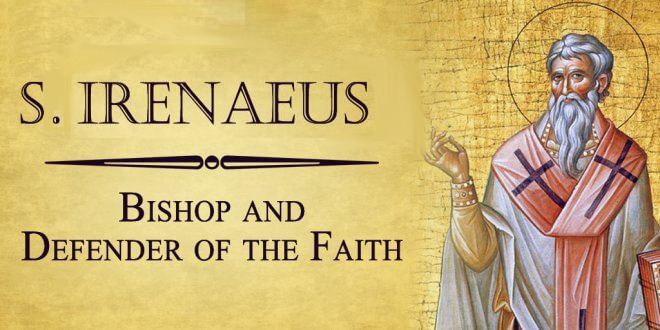
What the Church Fathers Believed
Is the dispensational view of Scriptures a New Idea?
Table of Contents
Introduction
The claim that dispensationalism is a “new idea.”
What Dispensational Theology Is
A basic look at its core beliefs and how Scripture is read.
The Charge of Being a Modern Invention
Did dispensationalism begin with Darby and Scofield?
Voices From the Early Church
How Justin Martyr, Irenaeus, and others speak into the discussion.
Where the Shift Happened
Why the early view faded, and allegorical interpretation rose.
Conclusion
Resources for Further Study
Returning to the earliest understanding of Scripture.
Introduction
Critics often say that dispensationalism did not exist in the early Church but emerged in the 19th century, specifically through the teachings of John Nelson Darby, and gained popularity with the release of the Scofield Study Bible. Because of this, critics claim it lacks historical continuity with the teachings of the Church Fathers.
In this blog, we will examine the origin of the Dispensational idea and determine whether it is a recent invention or rooted in Scripture and the Early Church Fathers.
What Is Dispensational Theology?
According to Michael F. Bird, Dispensationalism is, at its core, a theological system that interprets Scripture literally. Some of the teaching of this view includes: a pre-tribulation rapture, a seven-year tribulation, and Christ's return to establish a literal millennial kingdom. It divides history into distinct dispensations (typically Innocence, Conscience, Human Government, Promise, Law, Grace, and Kingdom). It stresses a sharp distinction between Israel and the Church, maintaining that God has separate plans and promises for each.[1]
The word "dispensation" literally means a stewardship, administration, or economy. In Scripture, it refers to a divinely appointed period in which God reveals new aspects of His will, inaugurates a new age, and imposes corresponding responsibilities on humanity (or the specific group to whom the revelation is given).[2]
Examples of these divinely appointed periods are
Innocence – From Creation to the Fall, that is, before the Fall of Man.
Conscience – From the Fall to the Flood (Adam to Noah; mankind governed by conscience and the promise of Gen 3:15).
Human Government – From the Flood to the call of Abraham (Noah to Abraham; government established after the flood, with the Noahic covenant).
Promise – From the call of Abraham to the Exodus (Abraham to Moses; the Abrahamic covenant and patriarchal age).
Law – From the Exodus/Moses to the crucifixion of Christ (Moses to the cross; the Mosaic covenant and Israel under the Law).
Grace (or Church) – From Pentecost to the Rapture (Acts 2 to the future removal of the Church; the current age of the Church).
Kingdom (or Millennium) – The future 1,000-year reign of Christ on earth after His second coming.[3]
The Key to reading Scripture is consistency. Dispensationalists are aware that the Bible was written in diverse literary forms, all of which God may employ under inspiration: history, poetry, fiction, prophecy, parable, drama, personification, proverbs, allegory, dogmatic instruction, myth, and legend. Dispensationalists know that...
The Bible describes God as a lion, a lamb, an eagle, a rock, a door, and so on.
But we also know that God is not literally a lion, a lamb, an eagle, a rock, or a door.
When the Bible speaks of the coming of the Messiah in the Old Testament, it often tells parts of the story; the full version from start to finish is hardly ever given, and when it is, it is very condensed.
Take the first promise of the coming redeemer found in Scripture. After the fall of Man in Genesis 3, we read of the coming Redeemer in Genesis 3:15, "And I will put enmity Between you and the woman, And between your seed and her Seed; He shall bruise your head, And you shall bruise His heel." This is how the Bible gradually reveals the coming Messiah.
Other passages provide a broader window of time and some detail; see Daniel 9:25–27 for another example. Here we find that from the decree to rebuild Jerusalem, exactly 69 "weeks" (483 years) will pass until Messiah appears and is then "cut off" or killed; after that, Jerusalem and the temple will be destroyed again, and in the final 70th "week" a future ruler will make a seven-year covenant with many, break it halfway through by stopping temple sacrifice, and set up an abomination that causes desolation until God's judgment falls on him. Many Christians agree that the first 69 weeks are a countdown to the Messiah's coming in the very year, but do not believe that a 70th week remains to be fulfilled. Dispensationalists, on the other hand, read the 70th week of Daniel's prophecy as we read the first 69 weeks, and in doing so, we hold to a consistent interpretation of Scripture or Hermeneutic.
The Claim of Dispensationalism as a Recent Invention
According to non-Dispensationalists like Millard J. Erickson, "The dispensationalist movement is of fairly recent origin. No trace of this theology can be found in the early history of the Church." [4] Walter A. Elwell agrees, claiming that Classical dispensationalism originated with J. N. Darby in the 19th-century Brethren movement, spread widely through post-Civil War American Bible and prophecy conferences, and was firmly entrenched by the Scofield Reference Bible and Chafer's Systematic Theology (1947–48).[5]
This claim, that the Dispensationalists are simple Johnny-come-latelies, is a common thought among many scholars, YouTubers, and bloggers. For example, regarding the 70th week of Daniel discussed above, Jole Richardson claims that the 70th week awaiting fulfillment is simply a dispensational invention.[6] Hank Hanegraaff, a famous radio host, author, and YouTuber, holds a similar view,[7] comparing Darby to Darwin and comparing eugenics that emerged from Darwin's view on evolution to the dispensationalist view of the end times and the suffering of Israel. Hank goes on to call Dispensationalism "Darby's Dogma" and uses other negative language to discredit this view.
It is true that Dispensational doctrine began to spread with Darby, gained momentum with the Scofield Study Bible, and swept across America over the past 150 years to a place of dominance, but as Hank Hanegraaff pointed out in his video, just because something is new does not make it wrong.[8] But as we will see, this is not a new teaching, but a revival of the earliest eschatology of the Church Fathers.
Dispensational Thought Among the Earliest Church Fathers
Far from being a recent invention, the core teachings of dispensational theology were those held by the earliest church Fathers. In the book The Early Church Fathers and the Foundations of Dispensationalism, Larry V. Crutchfield makes the case that "From Justin and Irenaeus we learn that the doctrine of the premillennial reign of Christ on earth was regarded as the orthodox faith of the early Church. The evidence indicates that millennialism (or chiliasm as it was originally called) was the predominant belief of the Church of the first three centuries." [9]
This dispensational view of Justin and Irenaeus was not their invention, but it was the teaching of the apostles themselves. That is, Irenaeus "received what he acknowledged to be his primary instruction in the Christian faith from someone who was himself trained by an apostle," and he "insisted on the importance of remaining faithful to the Christian message as received from Jesus Christ and the apostles and passed on by succeeding generations of the Church through its leaders. With him, that message is at only one removed [sic] from the apostolic source." [10]
According to the earliest church fathers, the core tenets of dispensational theology form an unbroken chain of authoritative teaching rooted in the teaching of the apostles and Christ Jesus.
When Irenaeus writes that "in the end the Church shall be suddenly caught up from this, it is said, 'There shall be tribulation such as has not been since the beginning, neither shall be," [11] not only does he believe in a future tribulation yet to come, he also believes that the Church will be called out before this time even begins. According to the testimony of the Early Church Fathers, this was the belief of the disciples of the apostle who taught them what they received from Christ Himself.
While this view fell away as the majority view of the early Church, it began to decline in the 3rd and 4th centuries with the rise of the allegorical interpretation of Scripture by men like Origen and Augustine. We must remember that "Before Augustine, for the first three hundred years of the church, the premillennial view was virtually the only view to be found in the church." [12] Here is a YouTube video that addresses the abandonment of dispensational ideas by the Early Church Fathers in the 4th century.
For more information, please check out the book Fathers on the Future. Also, there are two videos from the author that you can view:
https://youtu.be/Igx1075tCEk, Part One
https://youtu.be/9AfZlLxyYNE, Part Two
Conclusion
For years, critics have insisted that dispensational theology is a modern invention, something Darby dreamed up in the 1800s and the Scofield Bible popularized, with no roots beyond this. But this is untrue; this blog examined Scripture and the writings of the earliest Church Fathers and found that this claim is false. Dispensationalism, at its heart, is a consistent and serious approach to the Bible that recognizes God's unfolding work across distinct eras of history. While the movement certainly gained renewed momentum in the last two centuries, its core beliefs—such as a future tribulation, a literal millennial kingdom, and a distinction between Israel and the Church are found much earlier than Darby. What many call "new" is actually a recovery of the earliest eschatology handed down from the apostles themselves.
Resources and Further Reading
For more details, check out the book Fathers on the Future. Additionally, there are two videos from the author you can watch:
https://youtu.be/Igx1075tCEk, Part One
https://youtu.be/9AfZlLxyYNE, Part Two
Another helpful book is Dispensationalism before Darby: Seventeenth-Century and Eighteenth-Century English Apocalypticism.
A Book that traces the history of Dispensational thought is Discovering Dispensationalism: Tracing the Development of Dispensational Thought From the First to the Twenty-First Century. The authors' videos are below:
Another resource for this topic is…
https://www.gotquestions.org/dispensationalism.html
My website, https://bythelightoftruth.com/, also offers resources on this subject.
References
[1] Michael F. Bird, Evangelical Theology: A Biblical and Systematic Introduction (Grand Rapids, MI: Zondervan, 2013), 220.
[2] Arnold G. Fruchtenbaum, Israelology: The Missing Link in Systematic Theology, Rev. ed. (Tustin, CA: Ariel Ministries, 1994), 318.
[3] ibid
[4] Millard J. Erickson, A Basic Guide to Eschatology: Making Sense of the Millennium (Grand Rapids, MI: Baker Books, 1998), 110.
[5] Walter A. Elwell, Evangelical Dictionary of Theology: Second Edition (Grand Rapids, MI: Baker Academic, 2001), 344.
[6] https://joelstrumpet.com/rapture-pre-trib-post-trib-or-pre-wrath/
[7] https://www.facebook.com/BibleAnswerManBroadcast/videos/john-nelson-darby-the-heart-of-dispensational-eschatology-exegetical-eschatology/311917213676244/?utm_source=chatgpt.com
[8] Ibid.,
[9] Larry V. Crutchfield, "The Early Church Fathers and the Foundations of Dispensationalism," Conservative Theological Journal 3, no. 9 (1999): 191.
[10] https://fathersonthefuture.com/ Who Was Irenaeus of Lyons and Why Does He Matter?
[11] https://www.ccel.org/ccel/schaff/anf01.ix.vii.xxx.html
[12] Paul Benware, Understanding End Times Prophecy: A Comprehensive Approach (Chicago, IL: Moody Publishers, 2006), 121.