Which Jesus? Identifying the True Christ of Scripture
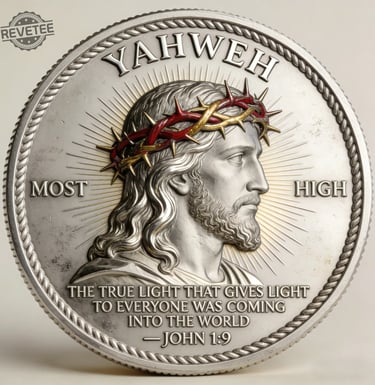
Many people say they believe in Jesus, but Scripture warns about the danger of believing in “another Jesus” who cannot save. This article looks at Paul’s warning in 2 Corinthians 11:4 and shows, using Romans 10, Joel 2, and the name of God in Exodus, that the true Christ is actually Yahweh. Readers are encouraged to examine the Jesus they believe in and to see that only the Christ described in Scripture, who is truly Lord, has the power to forgive sins and give eternal life.
William Neal Craig Doctor of Ministry (D.Min.) Candidate in Theology and Apologetics Liberty University, John W. Rawlings School of Divinity
1/13/20265 min read
The Christ According to the Scriptures
Table of Contents
Introduction: Why the True Christ Matters
Paul’s Warning: Three Spiritual Dangers (2 Corinthians 11:4)
A Different Spirit: Testing Spiritual Influence
A Different Gospel: When Salvation Is Distorted
Another Jesus: The Most Dangerous Deception
Jesus as LORD: Romans 10 in Light of Joel 2
The Divine Name: Yahweh Revealed in Jesus
The Romans Road: Where Many Agree—and Where the Line Is Drawn
Confessing Jesus as Yahweh: The Biblical Standard of Faith
Conclusion: Which Jesus Do You Believe In?
References
Why It Is Vital to Know the True Jesus
One of the most important questions for any believer is this: Who is the true Christ according to Scripture? Not based on tradition, denominational culture, or popular Christianity, but on what God has revealed in His Word.
The apostle Paul gives a sober warning in 2 Corinthians 11:4:
“For if someone comes and proclaims another Jesus than the one we proclaimed, or if you receive a different spirit from the one you received, or if you accept a different gospel from the one you accepted, you put up with it readily enough.”
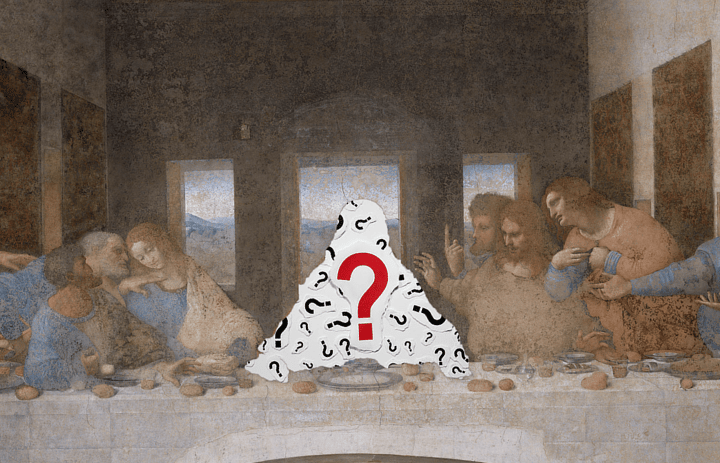
Paul points out three dangers: a different spirit, a different gospel, and another Jesus. Two are serious, but one is fatal. Let’s look at each one.
A Different Spirit (A Real but Lesser Danger)
Paul first warns about “a different spirit.” The Bible often tells believers to test the spirits, since not every spiritual influence comes from God.
False spiritual influence often reveals itself in three ways:
It does not glorify Christ.
It contradicts Scripture.
It elevates experience above truth.
The Holy Spirit always points to the true Christ shown in God’s Word. If the spirit behind a message denies who Jesus really is, it shows itself to be false.
A Different Gospel (A Corrupt Message)
Paul also warns about “a different gospel.” This is a message that might sound Christian but quietly changes the teaching about salvation:
By adding human effort to what God alone accomplishes.
By redefining sin.
Or by replacing grace with works.
Paul says that even if an angel preaches another gospel, it should be rejected. These false messages are often easy to spot because they change how a sinner is made right with God.
Another Jesus (The Greatest Danger)
Now we come to the most serious warning: “another Jesus.”
This is not a Jesus who is clearly false. This is a Jesus who seems so close to the real Christ that many people don’t notice the difference.
This “other Jesus” may:
Speak of love while denying the necessity of the cross.
Be honored as a teacher or prophet but not confessed as the true Lord.
Use the name “Jesus,” yet redefine who He is.
A false spirit or a false gospel is often easy to spot. But another Jesus can be confused with the true Christ if we are not firmly rooted in Scripture.
So we need to ask clearly: Who is the real Jesus according to the Bible?
Jesus as LORD: Romans 10 and Joel 2
Paul writes in Romans 10:9–13:
“If you confess with your mouth the Lord Jesus and believe in your heart that God has raised Him from the dead, you will be saved…
For ‘whoever calls on the name of the Lord shall be saved.’”
In verse 13, Paul is quoting Joel 2:32:
“Whoever calls on the name of the LORD shall be saved.”
In Joel, “the LORD” is YHWH, or Yahweh, the personal name of the God of Israel. Paul applies this passage directly to Jesus. He is not just calling Jesus “a lord” in a general way. He is saying Jesus is the LORD of the Old Testament, Yahweh Himself.
But the Bible goes even further.
The Divine Name: Yahweh and Jesus
In John 17:11–12, Jesus says the Father has given Him His own name. While some people discuss the exact words, the overall message of the Bible is clear.
In Exodus 3:14–15, Yahweh reveals the meaning of His name to Moses:
“I AM WHO I AM.”
Here, Yahweh speaks His own name in the first person. Later, Jesus uses this divine title for Himself in John 8:58:
“Before Abraham was born, I am.”
By doing so, Jesus identifies Himself with Yahweh.
In the Greek Old Testament, called the Septuagint, the name Yahweh is translated as kyrios, meaning “Lord.” This continues in the New Testament. So when the New Testament calls Jesus “Lord,” it is not just a respectful title. It is giving Him the divine name of Yahweh.
This is why Philippians 2:9–11 says that the name “Jesus” is now lifted up, so that everyone confesses “Jesus Christ is Lord (Kyrios).” This means that the crucified Jesus now carries the divine name and authority of Yahweh.
So when Paul writes in Romans 10:13, “Whoever calls on the name of the Lord shall be saved,” he is saying that salvation comes by calling on Jesus as Yahweh. Any Jesus who is less than this is not the Christ described in Scripture.
The Romans Road to Salvation
Let’s take a quick look at the well-known “Romans Road”:
All have sinned – Romans 3:23
Sin brings death – Romans 6:23a
Christ died for us – Romans 5:8
Salvation is God’s gift – Romans 6:23b
We are justified by faith – Romans 5:1
Up to this point, many people who claim to follow Christ will agree. But here is where the difference appears:
Confess and believe – Romans 10:9–10
“If you confess with your mouth the Lord Jesus…”
Call upon the Lord – Romans 10:13
“Whoever calls on the name of the Lord shall be saved.”
And as we have seen, this “Lord” is Yahweh from Joel 2:32, applied directly to Jesus.
Salvation is not just believing that Jesus was a good man, a moral teacher, or even a prophet. It is confessing Jesus as LORD, Yahweh Himself.
Conclusion: Why the True Christ Matters
Why is it so important to know who the true Christ is?
A different spirit can mislead.
A different gospel can distort.
But another Jesus cannot save.
Only the Christ described in the Scriptures
the true Lord,
the bearer of the divine name,
Yahweh revealed in the flesh as Jesus
has the authority to forgive sin and grant eternal life.
The question is not simply, “Do you believe in Jesus?”
The real question is: Which Jesus?
The Christ according to the Scriptures.
There is no other who saves.
References
https://www.gotquestions.org/is-Jesus-Yahweh.html. -- Is Jesus Yahweh?: Blog
https://youtu.be/DMs5Ft8muKs -- Jesus is Jehovah: Video
https://youtu.be/9OMytwzfu2w. -- The Earliest Christians Believed Jesus Was Yahweh: Video
https://youtu.be/MBZH1VAVje4. -- Why Jesus Being God AND Man Makes Perfect Sense: Video
https://youtu.be/zzLjNNLHYlQ --- What is YHWH? ( Known as the tetragrammaton ): Video